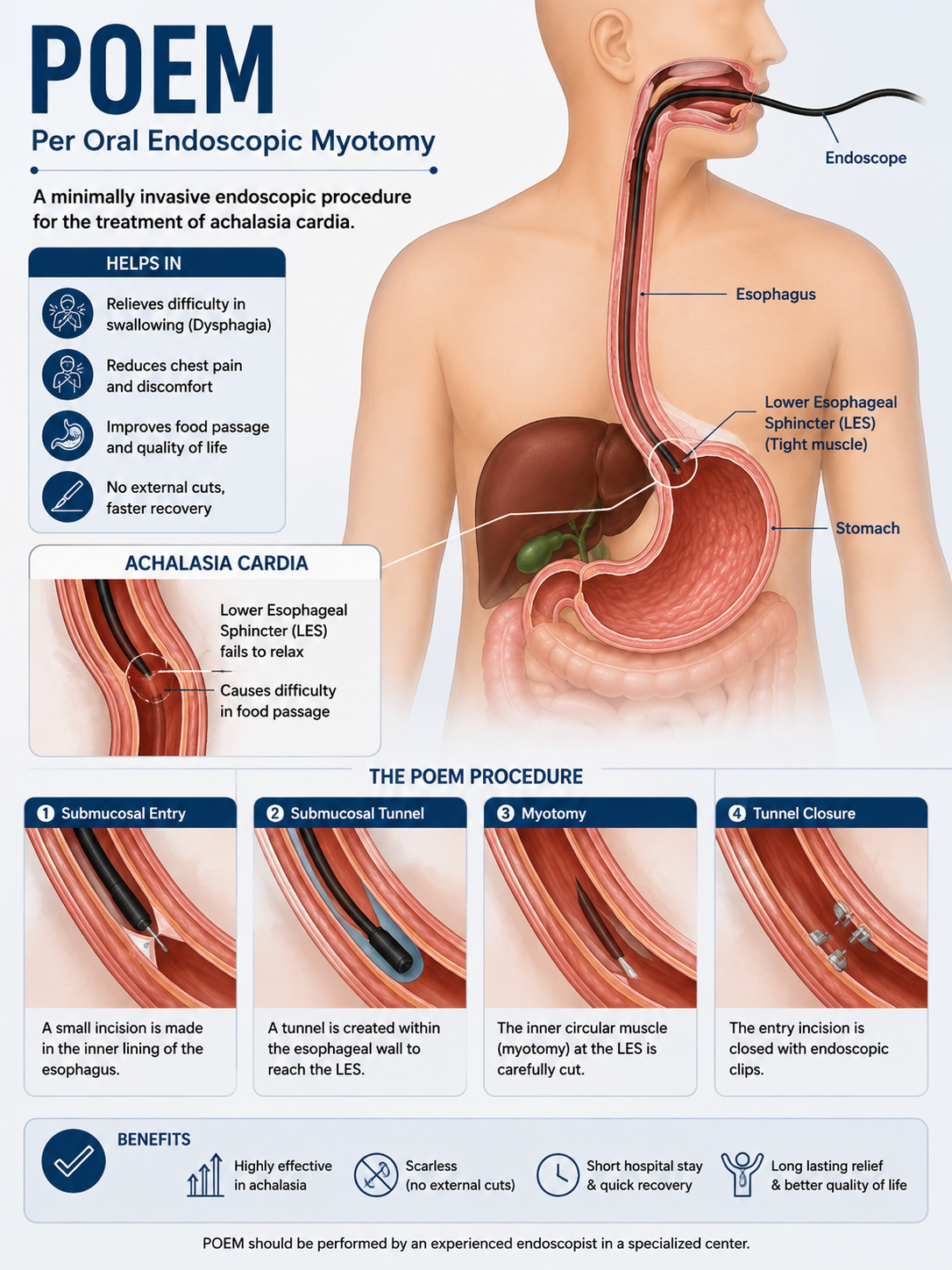
Peroral Endoscopic Myotomy (POEM) is an advanced endoscopic procedure used primarily for the treatment of Achalasia Cardia, a condition in which the lower esophageal sphincter does not relax properly and the esophagus has difficulty moving food toward the stomach. Patients with achalasia may experience progressive difficulty swallowing, regurgitation of food or liquids, chest discomfort, weight loss, and a feeling that food is getting stuck behind the chest.
During POEM, a flexible endoscope is passed through the mouth into the esophagus. A small opening is created in the inner lining of the esophagus, allowing the endoscopist to enter the submucosal space and create a tunnel toward the lower esophageal sphincter. The tight muscle fibres responsible for obstruction are then carefully divided. Once the myotomy is completed, the entry point is closed using endoscopic clips. Because the procedure is performed entirely through the mouth, no external surgical incision is required.
POEM may be considered for different types of achalasia, including patients who have persistent or recurrent symptoms after previous treatments such as pneumatic dilatation, botulinum toxin injection, or surgical myotomy. It can also be useful in selected patients with other esophageal motility disorders such as Esophagogastric Junction Outflow Obstruction (EGJOO) or spastic disorders, depending on clinical evaluation and diagnostic findings.
Before the procedure, patients are usually evaluated with tests such as upper GI endoscopy, barium swallow, and high-resolution esophageal manometry. These investigations help confirm the diagnosis, identify the type of achalasia, and determine the appropriate length of myotomy. In selected patients, technologies such as EndoFLIP may also be used to assess the functional opening of the esophagogastric junction and help tailor treatment.
After POEM, patients are generally monitored in the hospital and gradually started on liquids before progressing to a soft and then regular diet as advised. Some patients may develop gastroesophageal reflux after the procedure because the lower esophageal sphincter has been intentionally loosened. Follow-up, reflux assessment, dietary guidance, and acid-suppressing medication may therefore be advised when required.
The suitability of POEM depends on the patient's symptoms, manometry findings, previous treatment history, overall health, and other clinical factors. A detailed evaluation by an experienced gastroenterologist and interventional endoscopist is important to determine whether POEM is an appropriate treatment option and to discuss the expected benefits, limitations, and possible risks of the procedure.