Services
Jejunostomy
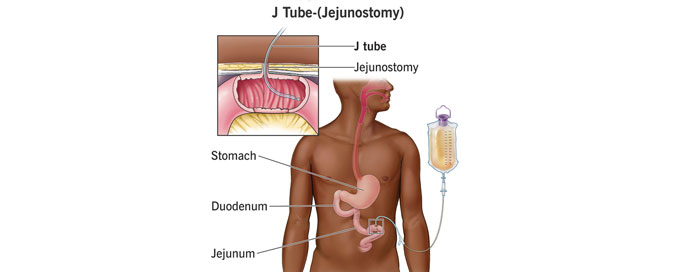
EUS-Guided Jejunostomy (GJS) is an advanced, minimally invasive endoscopic procedure designed to restore gastrointestinal continuity and relieve gastric outlet or proximal intestinal obstruction when conventional endoscopic or surgical options are not feasible. Using endoscopic ultrasound (EUS) guidance, a direct connection is created between the stomach and the jejunum, allowing food to bypass the obstructed segment and pass smoothly into the small intestine.
During the procedure, endoscopic ultrasound is used to accurately identify a suitable jejunal loop adjacent to the stomach. Under real-time imaging, a controlled access is created, and a specialized lumen-apposing metal stent (LAMS) is placed to form a secure and stable gastrojejunostomy. This precision minimizes the risk of injury to surrounding organs and ensures effective, long-lasting luminal patency.
EUS-guided GJS is especially beneficial for patients with malignant gastric outlet obstruction due to pancreatic cancer, gastric cancer, or duodenal tumors, as well as selected benign conditions where surgery carries high risk. It serves as an effective alternative to surgical gastrojejunostomy, offering symptom relief in patients who are poor surgical candidates or require rapid palliation.
The key advantages of EUS-guided Jejunostomy include rapid resumption of oral intake, avoidance of open or laparoscopic surgery, reduced hospital stay, and faster recovery. Patients experience less post-procedural pain, fewer complications, and improved overall quality of life compared to traditional surgical approaches.
With growing expertise and advances in endoscopic devices, EUS-guided GJS has emerged as a safe, effective, and durable solution for managing complex gastric outlet obstructions. When performed by experienced interventional endoscopists, it provides reliable symptom relief, improved nutritional status, and meaningful clinical outcomes in both palliative and selected therapeutic settings.

